

Platform and Technology
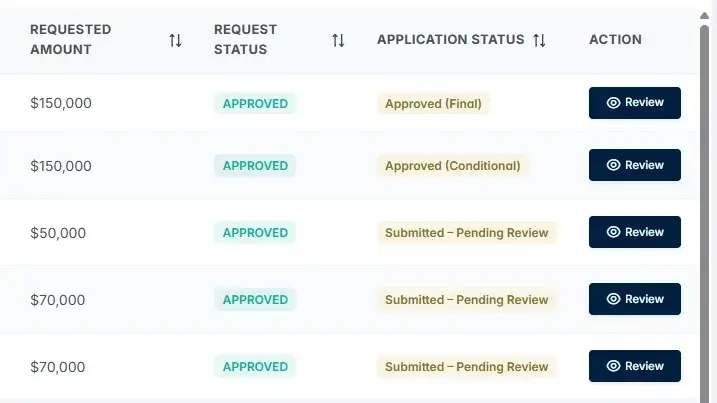
"Approved" Is Not a Status
A funding file passes through several approvals, and only one of them puts money in the client's account. Tracking the difference is most of the job.
4 min read
The platform
Most funding technology solves one step. A lead form. A document portal. A lender list. The gap between a business that wants capital and a transaction that actually closes is a dozen steps long, and a failure at any one of them ends the deal. This platform holds all of them.
What it does
Each of these exists in other people's software as a separate product you would buy, integrate, and maintain. Here they share one record, one permission model, and one set of rules.
Select any capability below
Every request is evaluated against the model appropriate to it — traditional cash-flow analysis or a revenue-based model — covering revenue behavior, existing obligations, and repayment capacity. Two senior underwriting analysts, each with more than twenty years underwriting commercial credit, work files alongside the system. The platform performs the analysis; the funding source makes the decision.
What runs underneath
Named engines from the platform architecture. The capability is what you use; the engines are what make it work.
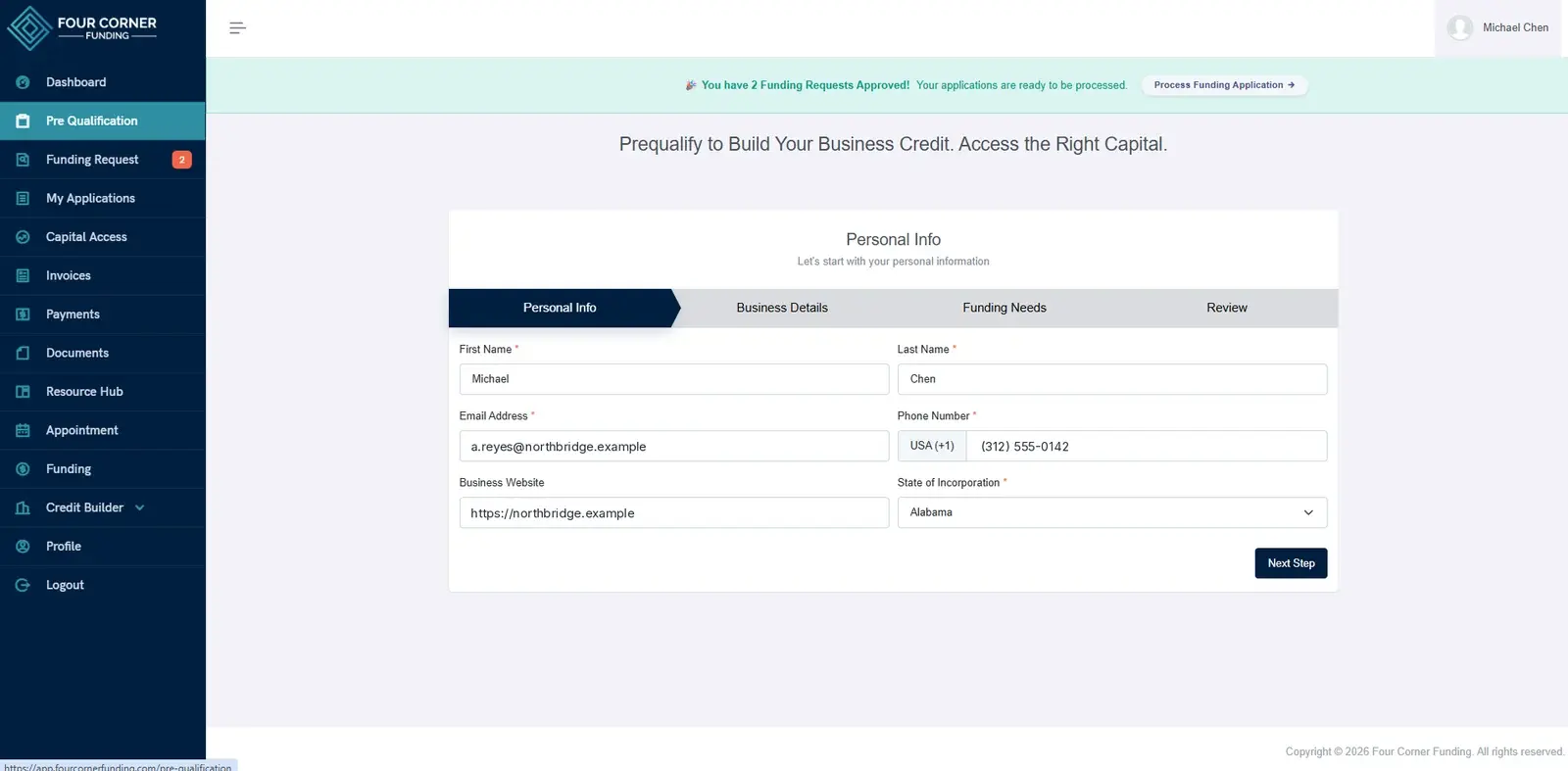
The analysis happens before the submission, not after it
Every request is evaluated against the model appropriate to it — traditional cash-flow analysis or a revenue-based model — covering revenue behavior, existing obligations, and repayment capacity. Two senior underwriting analysts, each with more than twenty years underwriting commercial credit, work files alongside the system. The platform performs the analysis; the funding source makes the decision.
Every funding source's criteria live inside the system
This is the part that cannot be assembled from tools. Each source's stated underwriting criteria are held in the platform, and a file is measured against all of them before it is presented to any one of them. A file goes where it already fits, rather than being shopped until something lands. Criteria are never exposed to a borrower or a partner — only the routing outcome is.
Credit and identity data come from the source, not from a form
The platform reads the business credit file directly — what is reporting, which tradelines are active, where the file is thin. Entity and identity verification confirms the business is real, consistently represented, and who it claims to be, which is a common and entirely avoidable reason applications are rejected outright. Consumer credit is available by soft pull, with the individual's authorization first, so evaluating a position never costs anyone a point. Data access runs on defined system workflows and refresh cycles — never on user demand, and never triggered by a borrower.
A credit profile built on purpose, not by accident
Vendor eligibility, tier progression, and reporting behavior are tracked as a deliberate sequence rather than a list of vendors to try. The work continues between funding events, so a business is in a stronger position at its next request than its last — and progressively less dependent on the owner's personal credit.
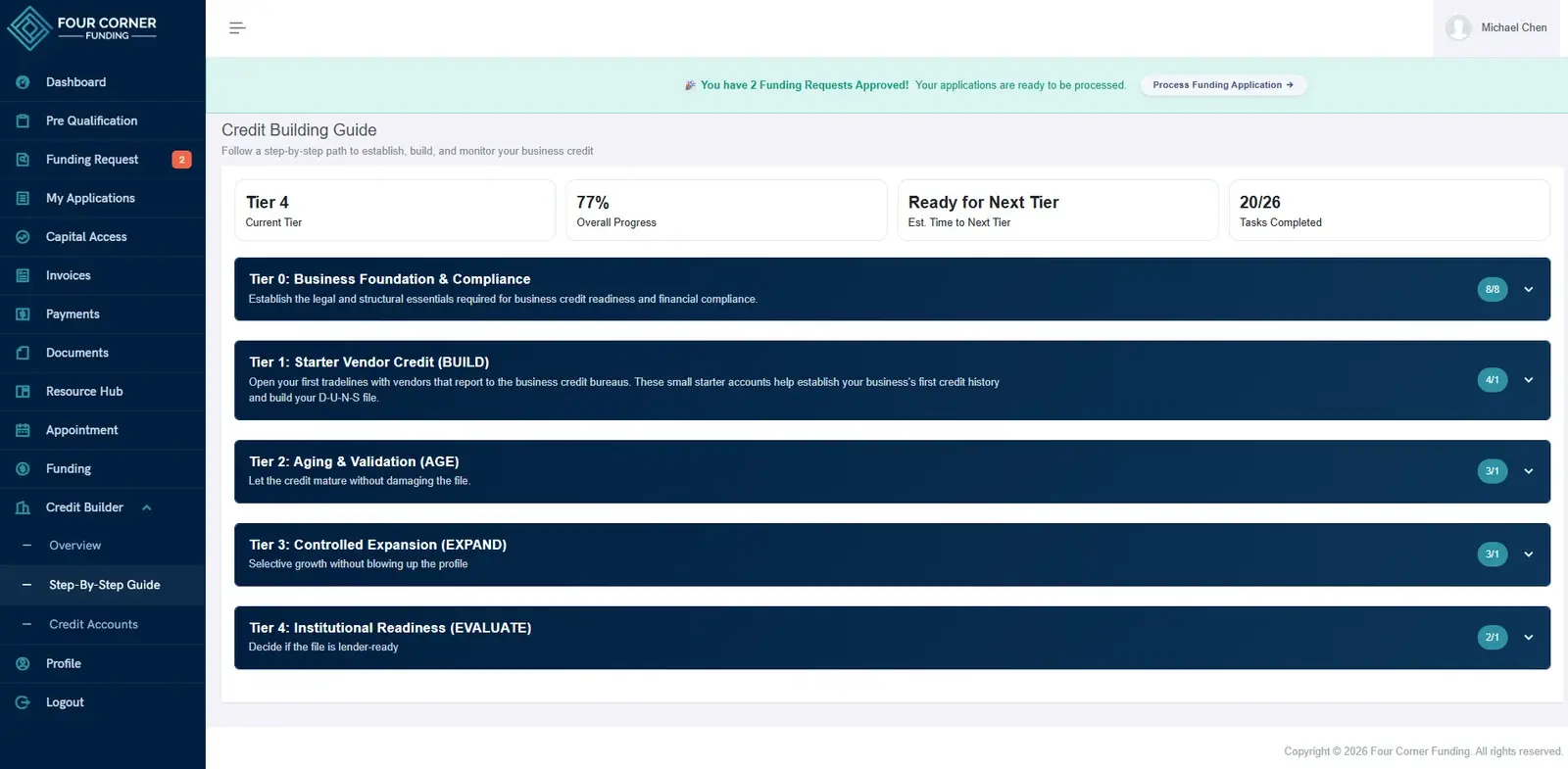
Order matters, and the platform knows the order
Business credit card access is sequenced rather than attempted at random, because the order of applications materially changes the outcome. Issuer approval and limits are always determined by each issuer under its own criteria — the platform governs sequence and timing, not the decision.
Requirements known up front, conditions owned to closing
Which documents a given structure requires is known before collection starts, so a client is asked once rather than four times. Bank statements, revenue records, and formation documents are collected in one place and reviewed against the requirement list. After approval, conditions carry an owner and a status, so a stalled file is visible rather than silent.
Built to be run by a team, not by one person with a spreadsheet
Employees, roles, and permissions are defined so staff see what their job requires and nothing beyond it. Client records, statuses, tasks, and communications sit in one place, and audit trails record what was requested, received, reviewed, and by whom. This is the difference between software you use and infrastructure you operate a business on.
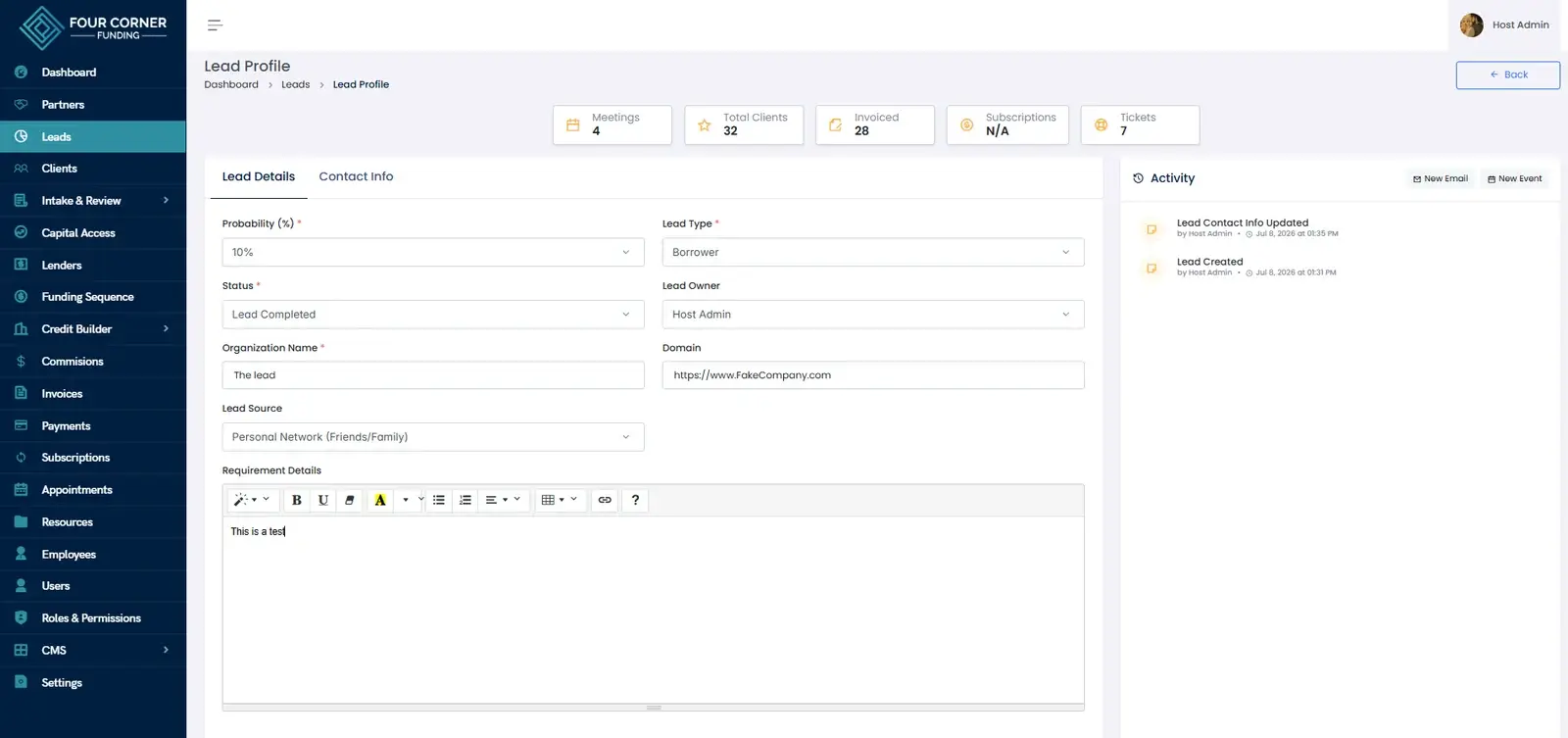
Your clients see your company, start to finish
Branding, domains, portals, and client-facing communications carry your identity. Your tenant is isolated from every other partner's — your clients, your data, your team, separated at the architecture level rather than by convention. Required platform, legal, and compliance disclosures remain in place.
Why it stays accurate
The criteria this platform routes against change constantly. Funding sources adjust appetite, tighten requirements, change documentation, and exit product lines without notice. A system holding last year's criteria does not fail loudly — it quietly sends files to sources that no longer want them, and the partner finds out through declines. Keeping the matrix current is not maintenance work around the edges of the product. It is the product.
Fifteen full-time software engineers
Not an agency, not contractors. A permanent engineering team, which is what continuous development actually requires and what most platforms in this industry do not have.
Underwriting and decisioning logic
The analysis models, repayment-capacity calculations, and routing rules at the center of the system.
Data and bureau integrations
The connections to third-party credit, identity, and verification sources, and the work of keeping them current as those sources change.
Multi-tenant platform and permissions
Tenant isolation, roles, and access control — the layer that lets many partners operate independently inside one system.
Borrower and partner portals
The interfaces clients, partners, and staff work in every day.
Quality assurance and security
Testing, review, and the controls protecting client and partner data.
Infrastructure and DevOps
The environments, deployment, and monitoring the whole platform runs on.
The logic layer
Each pillar owns a stage of the capital problem. Within a pillar, engines share state; across pillars, one engine's output becomes the next one's input.
Pillar 1
Before capital is a question, the business itself has to hold up to review. This pillar establishes whether the entity is structurally sound, consistently represented, and documented well enough to underwrite.
Evaluates consistency and legitimacy signals across the business record.
Checks entity identity, EIN, address, phone, email, website, licensing, banking, and documentation against one another. Mismatches between how a business presents itself in different systems are one of the most common and least visible causes of denial. The engine surfaces them before they reach a reviewer.
Identifies structural, compliance, documentation, credibility, and risk issues that block capital access.
Scans the file for the conditions that prevent business credit approval or capital access — structural gaps, compliance mismatches, credibility weaknesses, and documentation shortfalls — and returns them as specific, addressable items rather than a general score.
Converts identity, compliance, documentation, bureau, credit, and operating signals into an underwriting-grade readiness score.
Produces a single readiness measure that downstream engines consume as an input. The score is not a credit decision and is not shown to any party as one. It governs which stages of the platform a file is eligible to enter.
Pillar 2
Business credit is built through sequence and evidence, not enthusiasm. This pillar governs what a client is permitted to do next and requires verified reporting before advancement.
Guides legitimate business-credit development through structured stages and verified reporting activity.
Moves a client through defined credit-building stages, each with entry requirements and evidence of reporting activity. Progress is recorded as system state, so a partner sees exactly where a client is and what remains.
Governs progression through Tier 0 and later credit-building tiers.
Tier progression is earned through rules and evidence, not self-selected. A client cannot advance by declaring readiness; the engine evaluates reporting behavior and file state and releases the next tier when the conditions are actually met.
Determines which credit accounts are appropriate at the current stage and blocks premature applications.
Prevents premature, duplicative, and high-denial actions by gating account eligibility to the client's current tier and file state. This is the difference between a vendor list and a controlled credit-development path.
Pillar 3
Structured evaluation applied consistently to every file. The platform assembles data, documents, calculations, risk factors, and conditions into a reviewable package under authorized human control.
Evaluates borrower and transaction data using product-specific underwriting paths.
Applies structured calculations, conditions, flags, documentation requirements, and risk logic along the underwriting path appropriate to the product family. Outputs support decision-making by authorized personnel; they are not final credit decisions.
Interprets business-credit data and reporting behavior through controlled access.
Reads business-credit reporting to validate vendor tradeline activity and support tier logic. Access occurs through approved system workflows on defined refresh cycles — never on user demand, and never triggered by a borrower.
Maps qualified files to eligible product categories based on policy fit.
Routes files internally to appropriate product categories and approved capital sources. Capital-source identities, hierarchy, and routing logic are internal by design and are never exposed on any public page or to any borrower or partner interface.
Detects likely denial triggers before an application or submission occurs.
Evaluates missing conditions, sequencing conflicts, utilization risk, and readiness gaps ahead of submission. Catching a denial trigger before submission is materially cheaper than recovering from a decline afterward.
Pillar 4
Capacity, structure, and timing evaluated together. The objective is an appropriate capital structure — not the largest available number.
Models issuer sequencing, inquiry timing, and utilization management for qualified profiles.
Accounts for sequencing, inquiry timing, utilization management, relationship factors, and application timing. The engine models sequence; it does not promise approvals, limits, or terms.
Determines attainable capital capacity across the full financial picture.
Evaluates personal and business credit, revenue, cash flow, time in business, liquidity, deposits, debt, industry risk, guarantor strength, collateral, documentation, and fundability to model realistic capacity rather than aspirational figures.
Designs an appropriate capital structure across eligible products.
Balances cost, repayment burden, liquidity, timing, and risk across eligible product families. The engine is designed to avoid maximizing debt blindly — an over-leveraged approval is a failure state, not a win.
Determines the order and timing of capital acquisition across the business lifecycle.
Sequences capital events to reduce conflicts between products and preserve future options. What a business does first constrains what it can do next; the engine makes that constraint explicit before it becomes a problem.
Pillar 5
The file does not end at funding. This pillar governs what happens next and keeps the client's history working in their favor.
Identifies the next appropriate action based on current file state.
Returns the next business-credit, documentation, readiness, or capital action a client should take given exactly where they are — replacing generic checklists with state-aware direction.
Produces phased, multi-year business-credit and capital-readiness roadmaps.
Builds a staged roadmap tied to the client's goals, blockers, timeline, and financial profile, so readiness work is planned against a real horizon rather than assembled reactively.
Surfaces eligible product and opportunity categories only after required gates are satisfied.
Eligibility is revealed, not browsed. Categories appear once the file satisfies the gates that precede them. This is deliberately not an open marketplace — visibility itself is a controlled state.
Platform outputs support readiness evaluation and workflow. They are not credit decisions and are not guarantees of approval. Public descriptions explain capability without exposing proprietary thresholds, internal routing, or capital-source identities.
The software
Engines decide. Modules are where people work. Each module below is scoped to an audience and shows only what that audience is cleared to see.
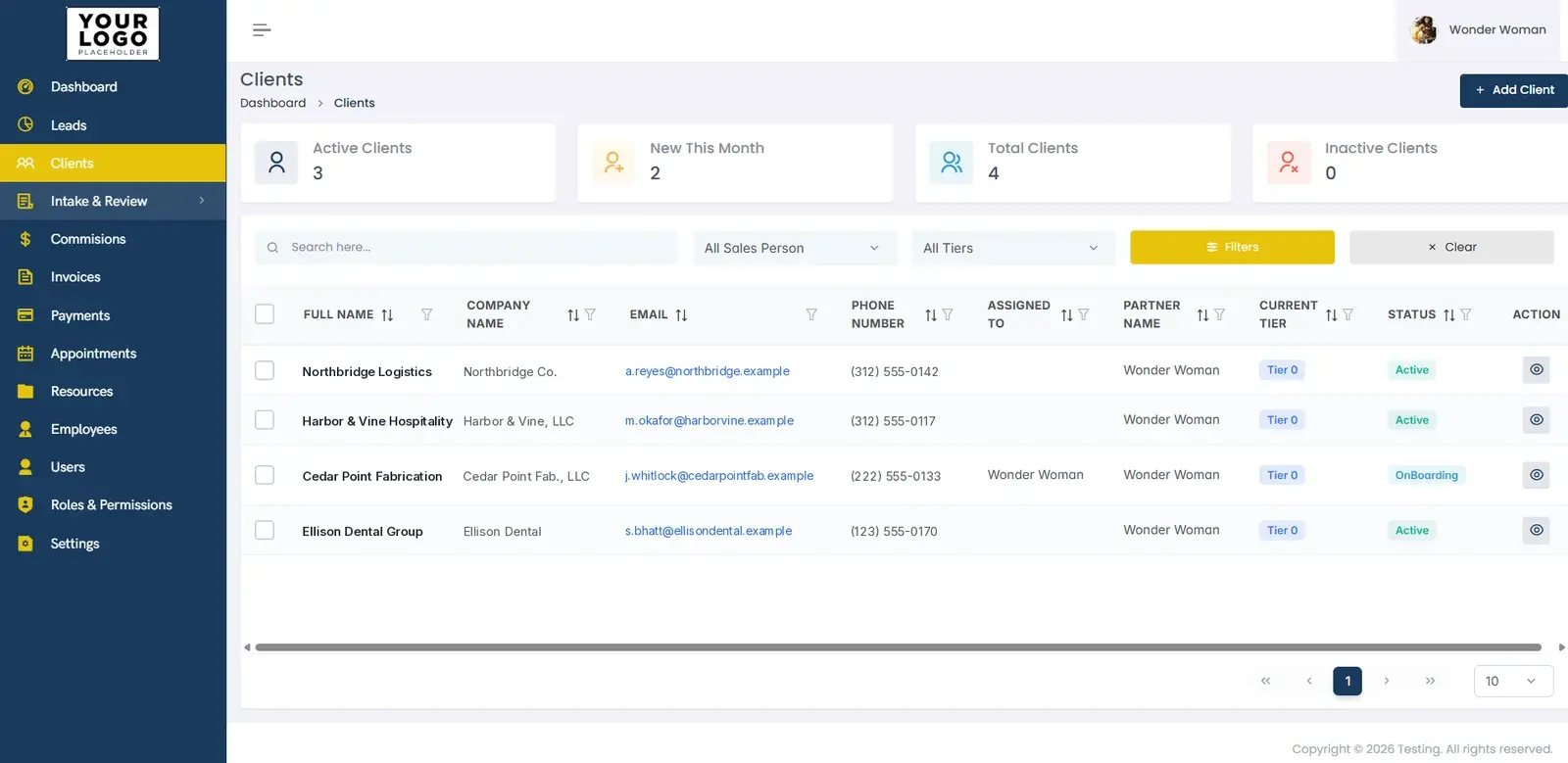
A structured, guided environment — not open navigation. The client sees their state, their next required action, and nothing they are not cleared to act on.
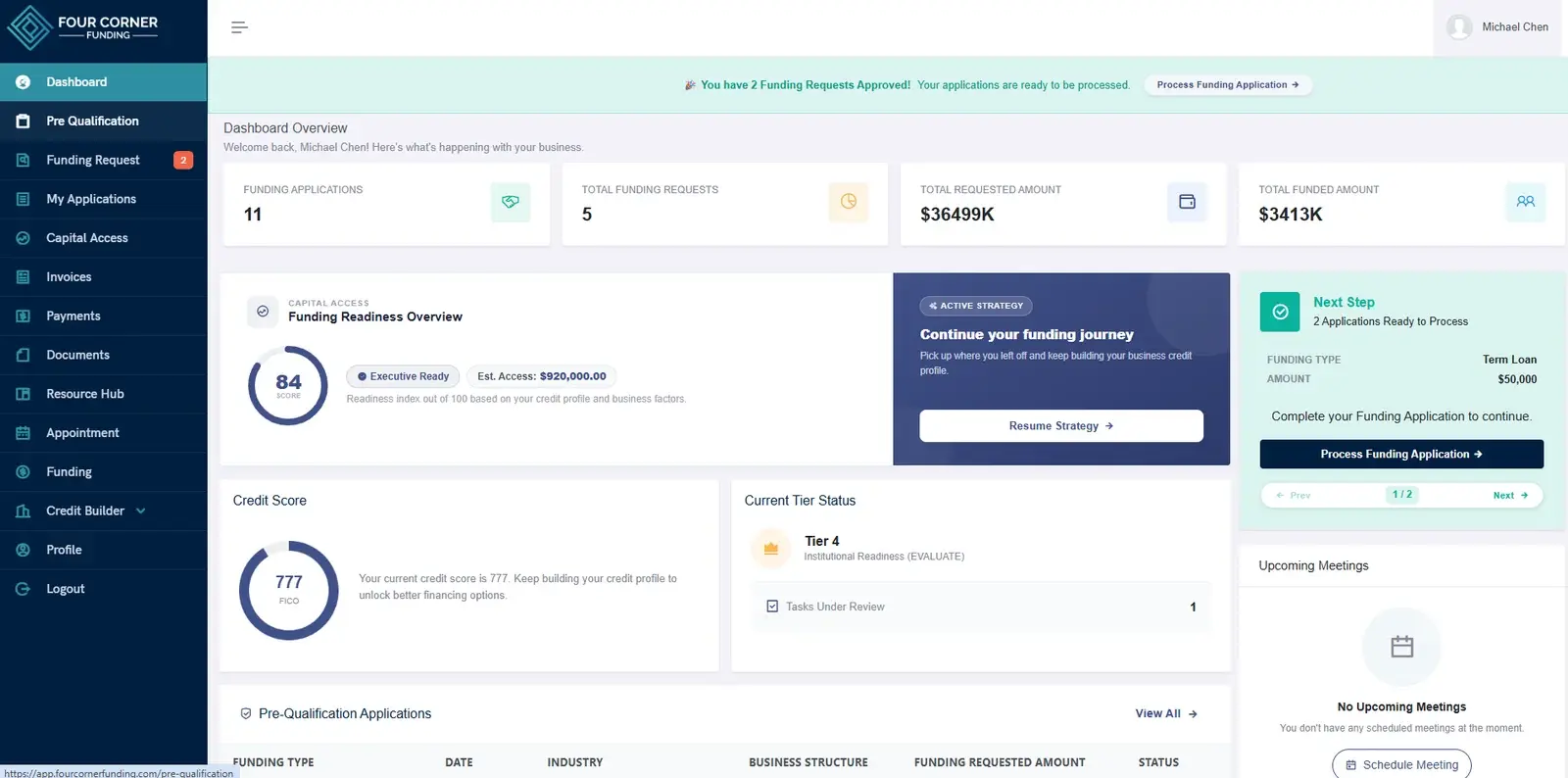
Full client lifecycle visibility in one workspace. Partners see every dimension of client state at once rather than a single number.
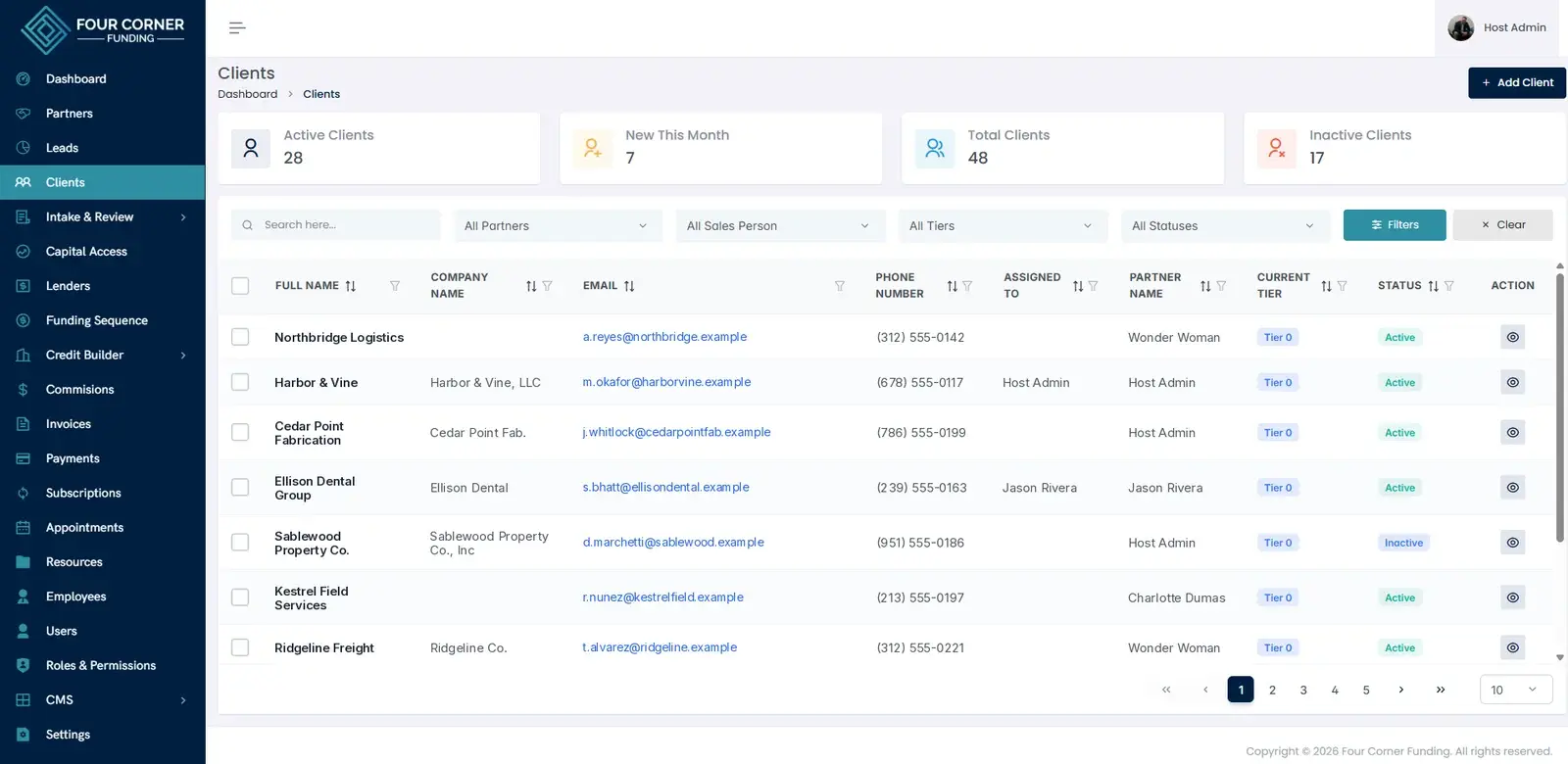
A fully branded, tenant-isolated deployment. The operator controls their brand, their team, and their clients — while central underwriting logic stays central.
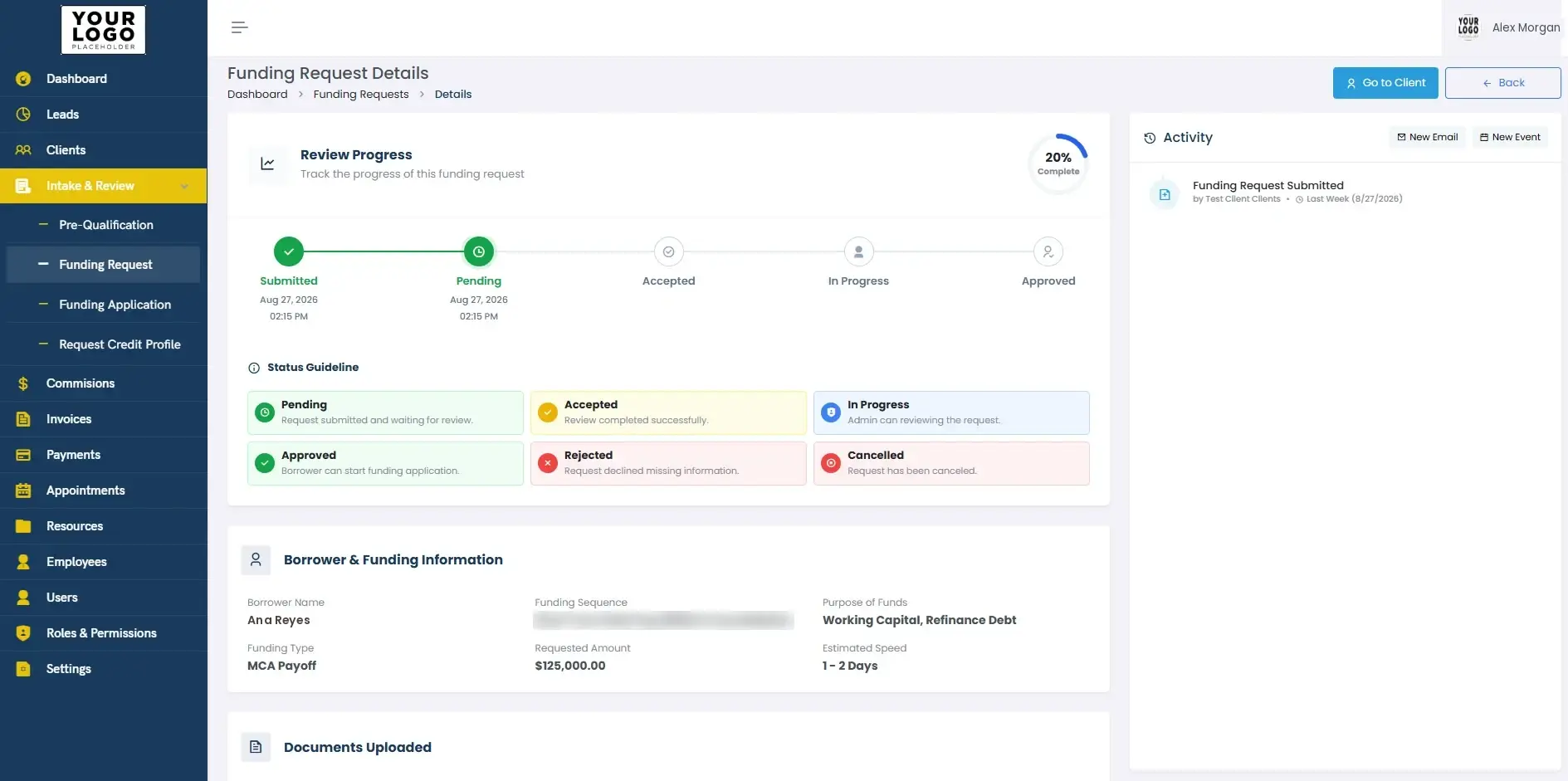
Where files are assembled, conditioned, and moved. The workspace enforces that a file is complete before it can advance.
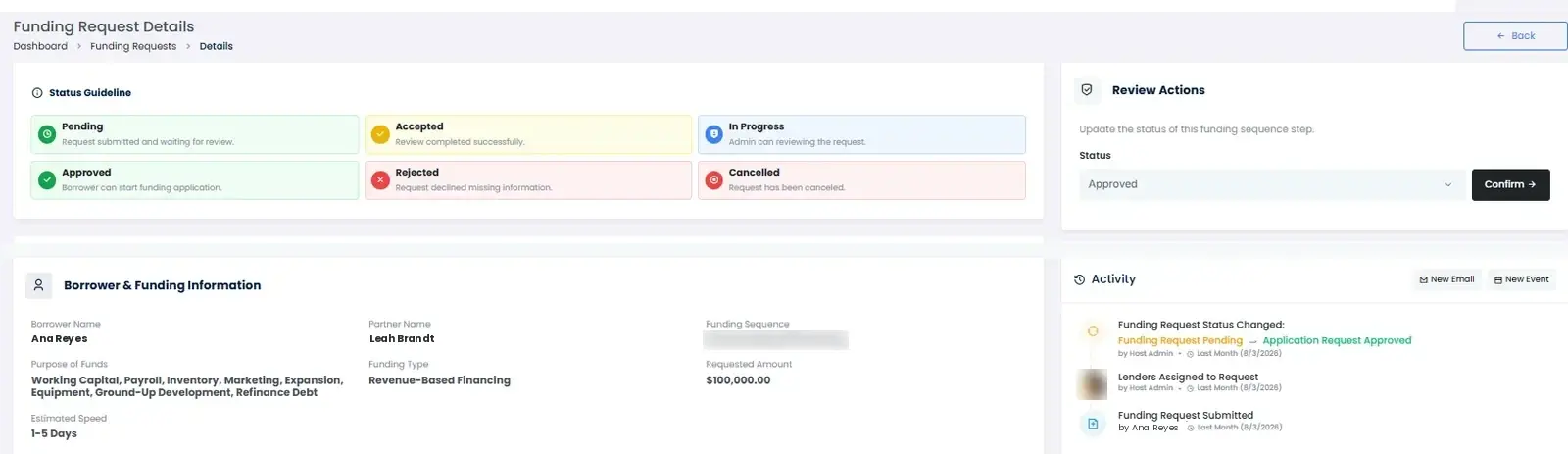
A centralized vault plus the requirement logic that decides what a given file actually needs.
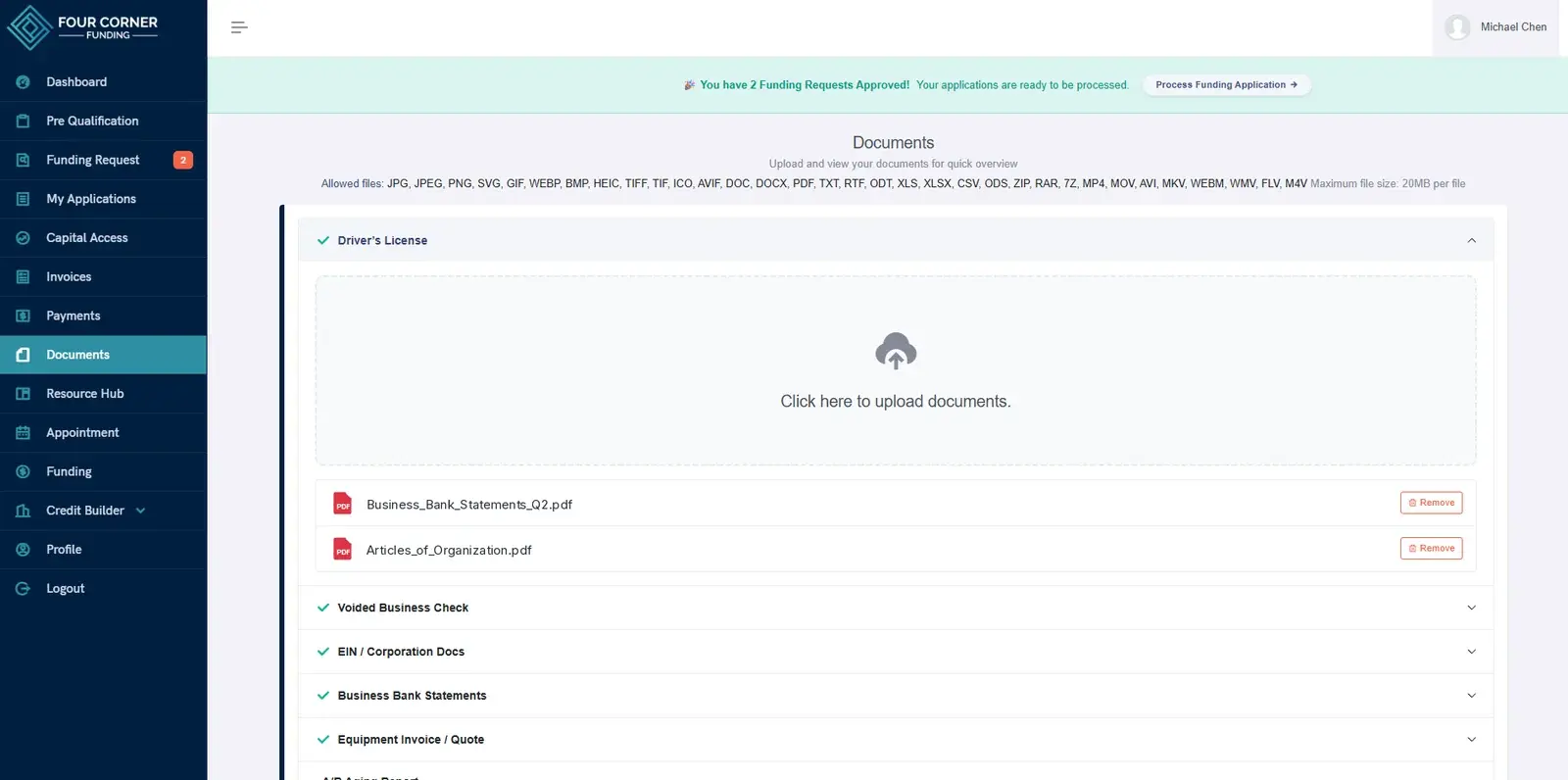
The layer that connects engine output to what the interface will actually permit. This is what makes the platform a system rather than a set of screens.
In this module
Deal flow
The funding pipeline is not a separate CRM. It reads the same file state the engines write to, so a document that fails verification in one place stops the deal everywhere.
Stage counts are synthetic and shown for interface demonstration only.
The control layer is what makes this infrastructure rather than software. These constraints hold regardless of role, tenure, or urgency.
Insights
The operating problems the platform was built around, written up in plain terms.
A funding file passes through several approvals, and only one of them puts money in the client's account. Tracking the difference is most of the job.
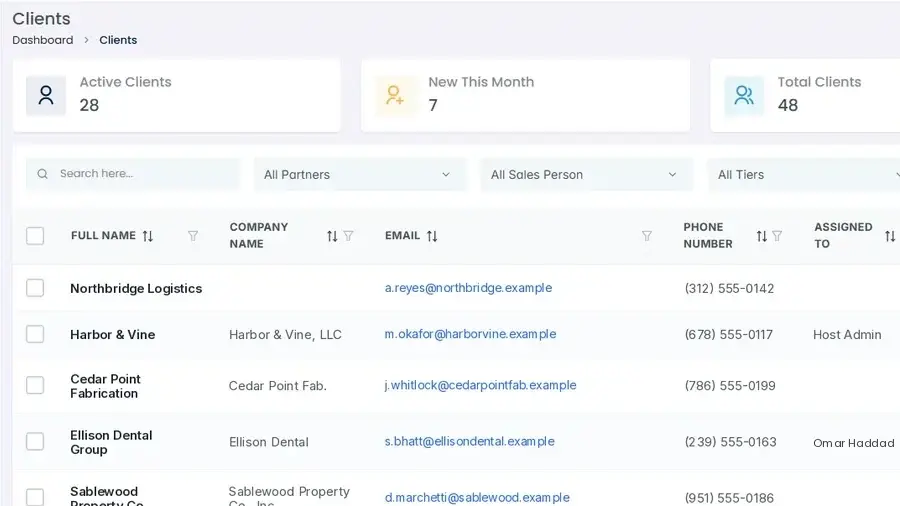
Almost every funding operation stalls at roughly the same size, and it is not a sales problem. It is the number of open files one person can hold in their head.
Built for operators
If you manage clients or run a funding operation, the walkthrough covers how you would work inside the system — the dashboard you would live in, the gates you would encounter, and what stays centrally governed.
Financing is subject to underwriting and program eligibility. Platform outputs support readiness evaluation and workflow; they are not guarantees of approval.