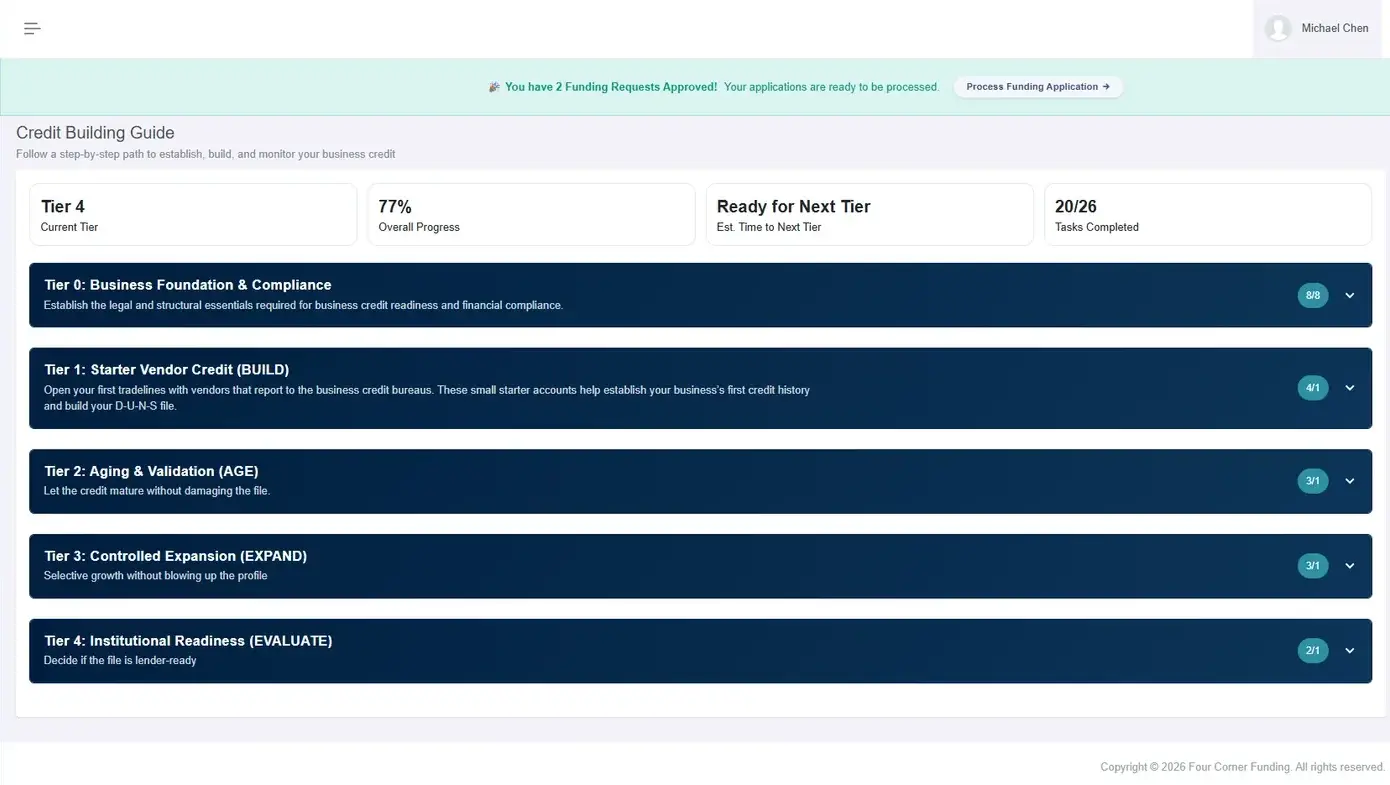

What a Funding Readiness Score Is For
A readiness score is not a prediction and it is not an approval. Used properly, it tells you which files to work, in what order, and what is missing.
Put a number on a funding file and people immediately want it to mean something it does not. Clients read it as a promise. Brokers read it as a shortcut past their own judgment.
A readiness score is neither. It is a triage tool, and it is at its most useful when everyone involved understands exactly what it is for.
What the number actually summarises
Here is a readiness overview for a business that is in good shape.
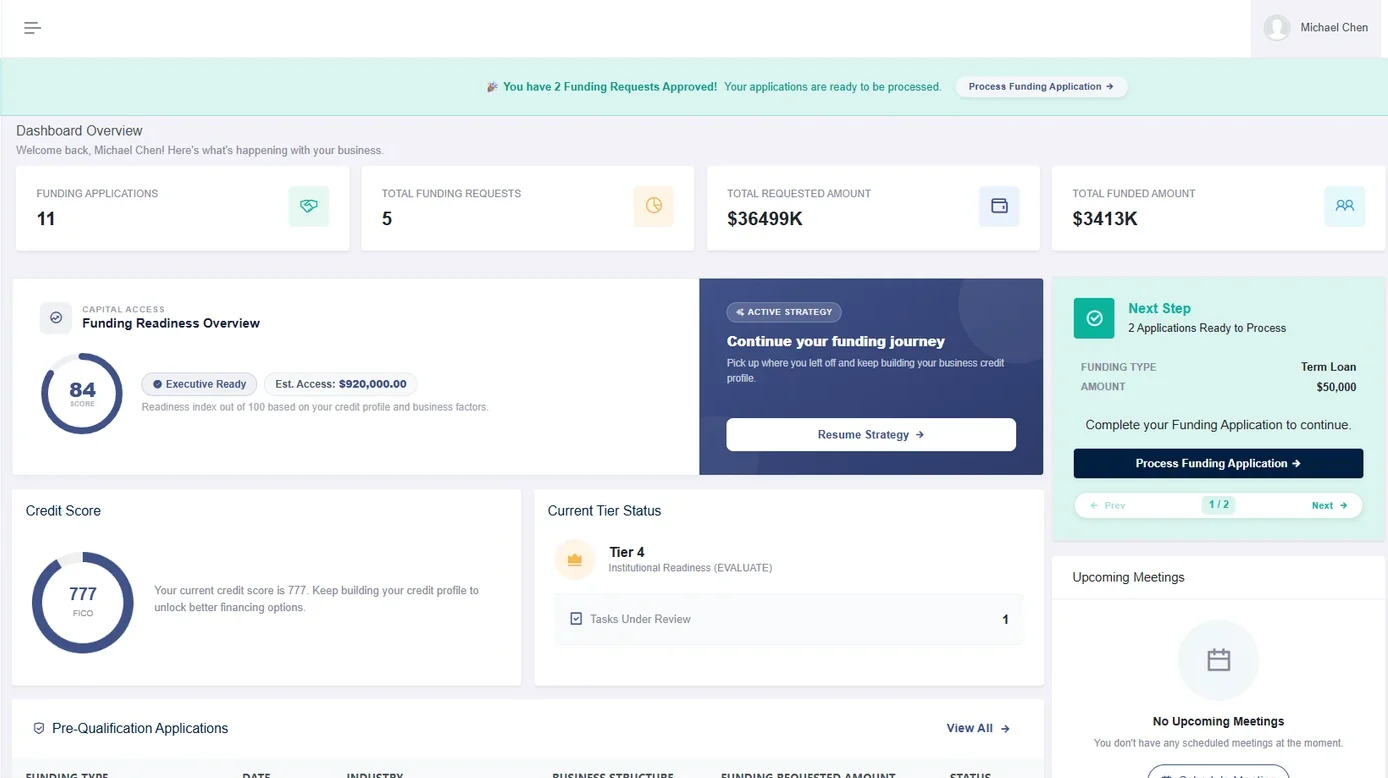
The screen says it plainly under the score: a readiness index out of 100, based on the credit profile and business factors. It is a summary of how complete and how strong the file is across the things funding sources look at — not a single metric, and not one number standing in for a credit decision.
Around it sit the things that give the number context: the owner's credit profile, where the business sits in its credit-building tiers, and — most importantly — the next step.
What it is not
Two things the score is not, and they are worth saying out loud to clients.
It is not an approval. Funding decisions belong to the funding source. A high readiness score means the file is well prepared; it does not mean a lender has said yes, and it should never be presented as though one has.
The estimate is not an offer. That estimated access figure is exactly what it says — an estimate, based on the file as it stands. Actual terms depend on the funding source, the product and the underwriting. Treat it as a planning number, not a quote.
A client who understands both of those is a client who does not feel misled later. A client who does not will remember that you showed them a big number.
What a low score is for
The more useful case is the file that is not ready.
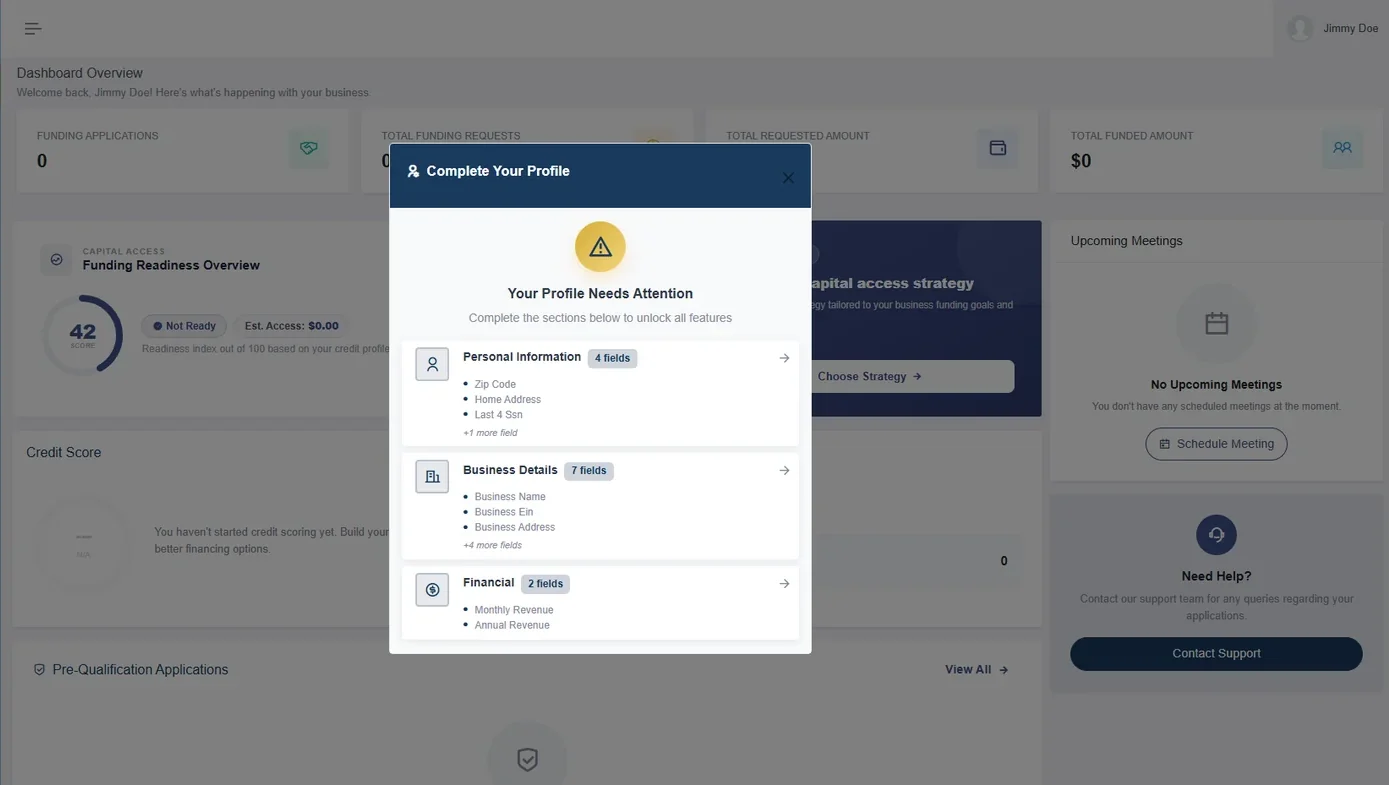
A score of 42 does not mean no. It means not yet, and — this is the part that matters — it comes with the reason. In this case the profile is incomplete: personal details, business details and revenue figures are still outstanding, so there is not enough on file to assess.
That turns an awkward conversation into a useful one. Instead of telling a business owner their file is weak, you can show them exactly what to complete and let them do it.
Using it to decide what to work first
The practical value shows up when you have more than a handful of files.
Every operator has limited hours. The score lets you sort the book into rough groups:
- Ready — complete, strong, worth submitting now. Your time goes into packaging and placement.
- Close — one or two gaps. Your time goes into closing those specific gaps.
- Early — significant work to do. The client's time goes into the profile and the credit-building steps; yours goes in later.
Without that sort, operators default to working whichever client called most recently — which is rarely the file most likely to fund.
Where judgment still wins
A score is built from what is on file. It does not know that the client's biggest customer just paid a large invoice that will clear next week, or that the dip in June was a one-off equipment repair. You do.
So use the number to decide where to look, then look. The score gets you to the right file faster. Your judgment decides what to do with it.
Four Corner Funding is the DBA and public operating brand of Four Corner Holdings, LLC. This post is general information about operating a commercial finance business. It is not legal, regulatory, tax or financial advice, and it is not a substitute for counsel licensed in your jurisdiction. Illustrative platform view. Fictional companies and synthetic data shown for demonstration. Platform outputs support readiness evaluation and workflow; they are not credit decisions or guarantees of approval.