
Running a Funding Business Under Your Own Brand
White-label is not a logo swap. It is every screen, email and document your client touches carrying your name — and a team structure you control.
"White-label" gets used loosely enough in this industry that it has almost stopped meaning anything. Sometimes it means a referral link with your name on it. Sometimes it means a logo in the corner of someone else's portal.
For an operator trying to build a real funding business, neither of those is the point. The point is that when your client deals with your business, everything they see is yours — and that you have the tools to run a team behind it.
Here is what that looks like in practice.
Your operation, at a glance
Start with the view you open every morning.
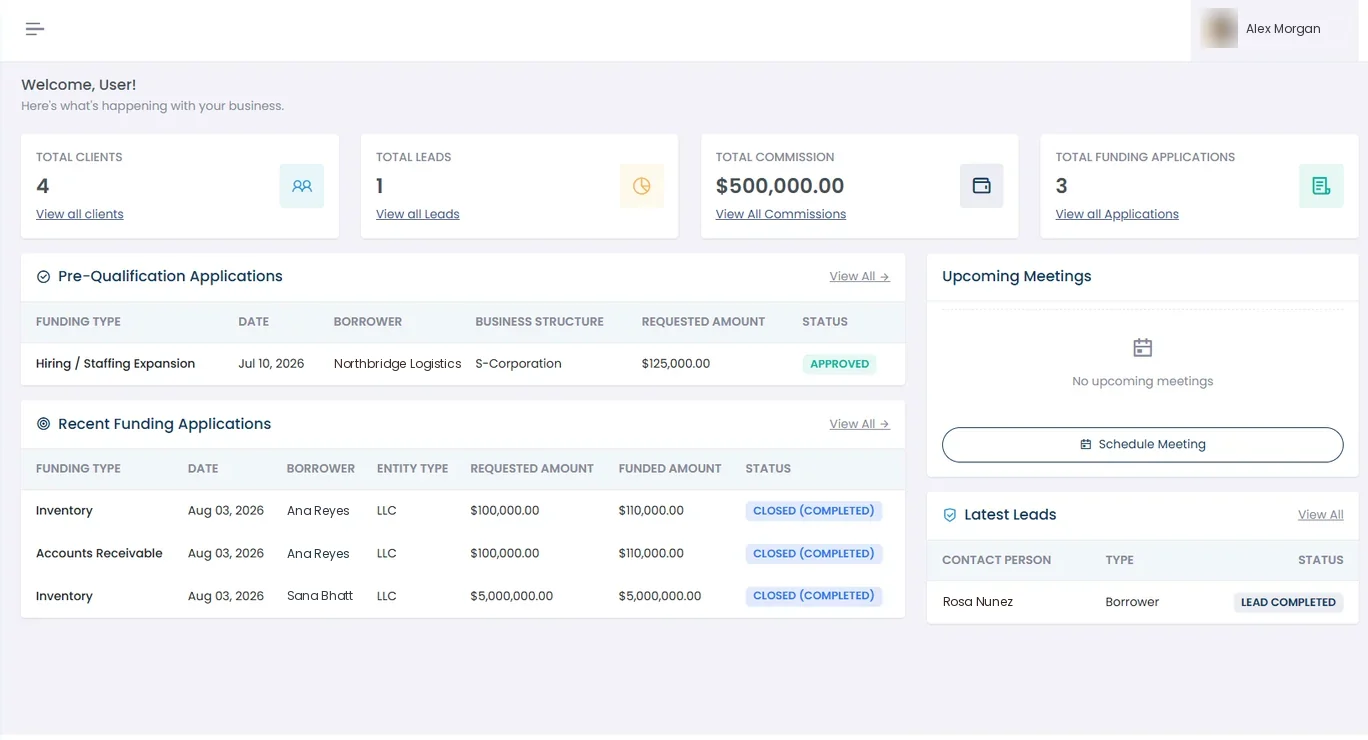
Clients, leads, applications in flight, what has closed, what is scheduled. It is your book, in your environment, visible to you and your team and nobody else.
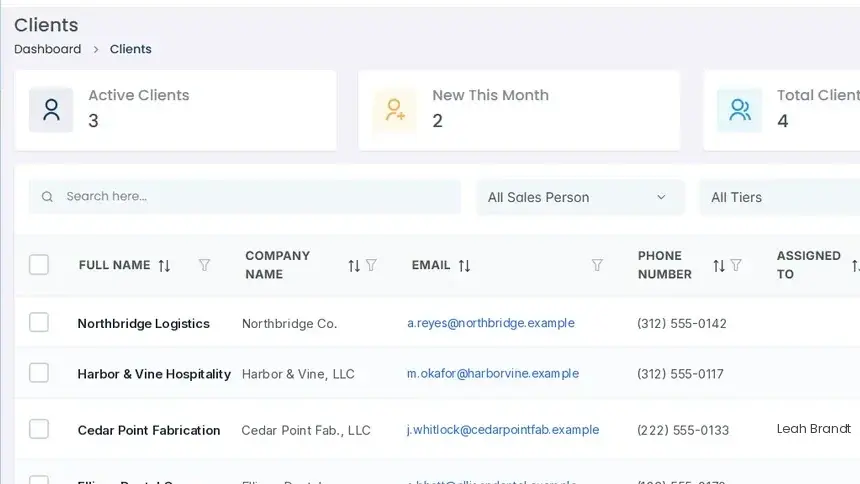
That last part matters. In a proper white-label setup, your clients belong to your environment. Another partner on the same platform cannot see them, and your client never sees anyone else's brand.
Your brand, everywhere the client looks
The branding is the part most people picture first, and it is broader than a logo.
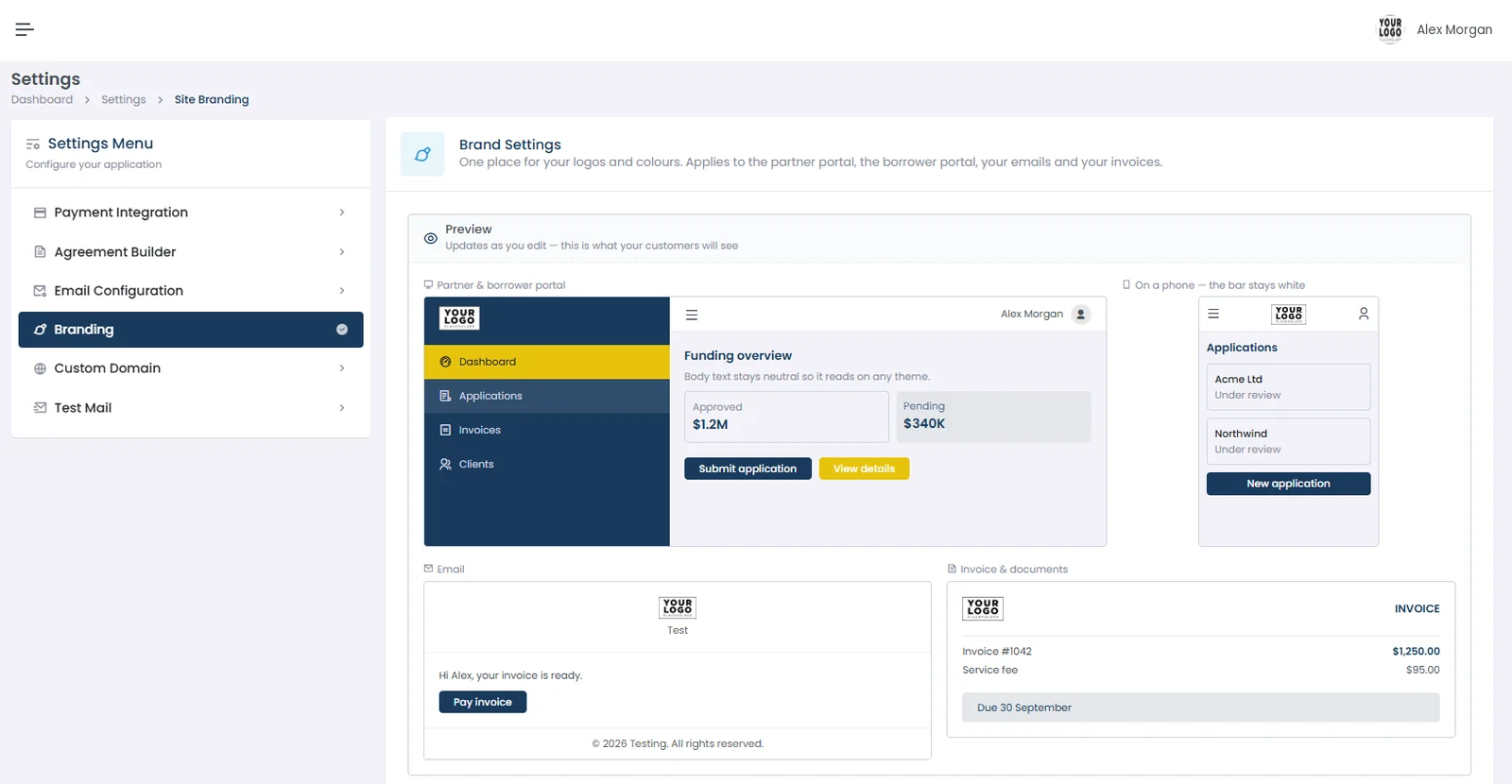
A single set of brand settings flows into the partner portal, the borrower portal, the emails your clients receive, and the documents they get from you. The preview shows each of those as you edit, so you see what your client will see before they see it.
Alongside it sits a custom domain. Your client logs in at your address, not someone else's. That is a small thing technically and a large thing for trust — a business owner handing over bank statements wants to know whose door they are walking through.
A team, not just a login
The part that separates a white-label business from a white-label link is what happens when you stop working alone.
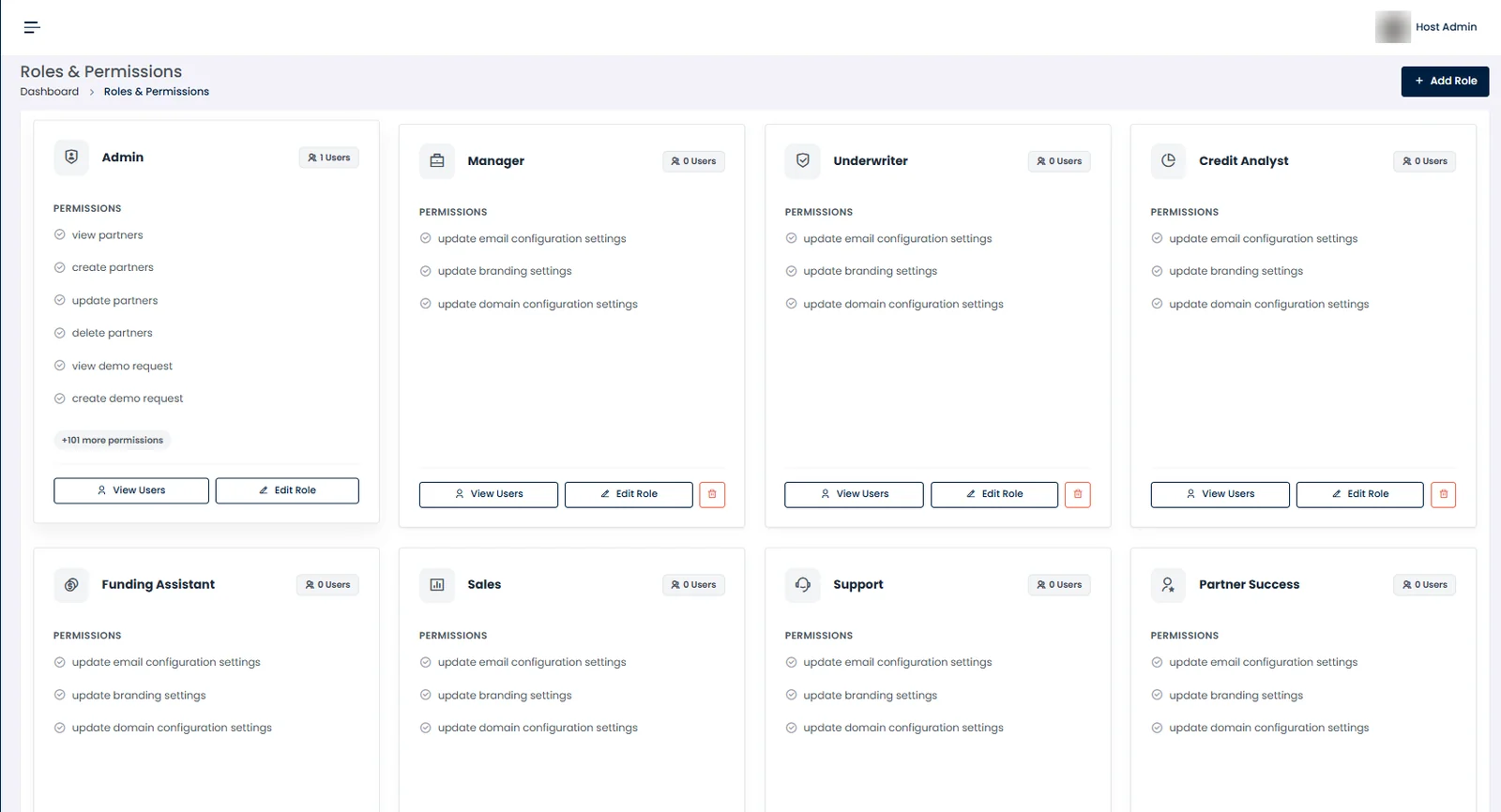
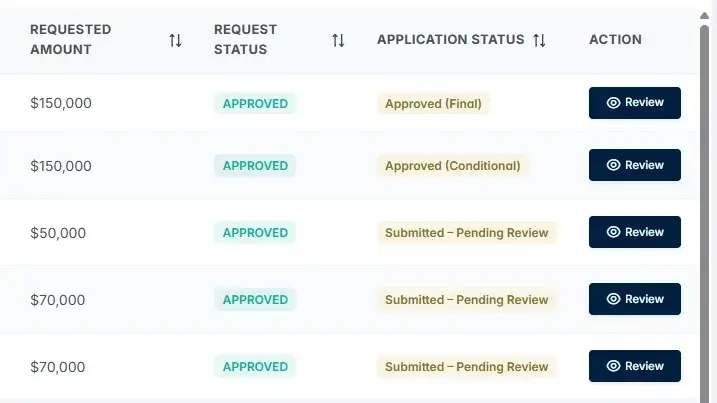
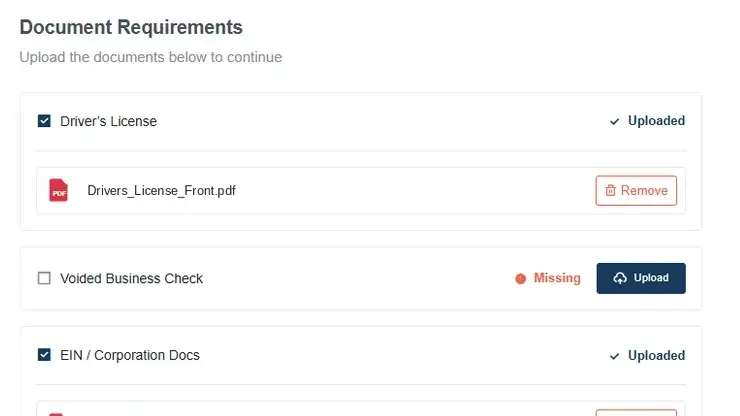
The moment you add a second person, you need to decide what they can see and change. A salesperson needs their leads and clients. A funding assistant needs document collection and file status. Whoever handles underwriting review needs the file detail. Very few people need access to billing settings, your brand configuration, or your domain.
Role-based permissions let you give each person exactly what their job requires — and nothing that lets them break something they should not be touching. It is the difference between hiring help and hiring risk.
What stays central, and why that is good
There is one thing a white-label partner does not control, and it is worth being plain about.
The underwriting logic, the readiness rules and the workflow gates are governed centrally and are not editable by individual partners. That can sound like a limitation. In practice it is the reason the platform is worth building on: a file processed in your environment is evaluated the same way as a file processed anywhere else. Your clients get a consistent standard, and you get infrastructure you did not have to build and cannot accidentally break.
You own the brand, the book and the team. The engine underneath stays consistent for everyone.
One thing white-label does not change
Your name on the portal does not change what licensing your activity requires.
If the work you do in a given state requires a license there, it requires it whether the portal says your name or someone else's. White-label is a question of brand and operations; licensing is a question of what you actually do and where your clients are. We wrote about how to think through the second one in Do You Need a License to Broker Business Loans?.
Get both right and you have something worth building: a funding business that looks like yours, runs like yours, and stays on the right side of the rules.
Four Corner Funding is the DBA and public operating brand of Four Corner Holdings, LLC. This post is general information about operating a commercial finance business. It is not legal, regulatory, tax or financial advice, and it is not a substitute for counsel licensed in your jurisdiction. Illustrative platform view. Fictional companies and synthetic data shown for demonstration. Platform outputs support readiness evaluation and workflow; they are not credit decisions or guarantees of approval.